Most people assume that "12V" means safe, simple, and forgiving. But in the pool industry, that assumption will cost you a flickering light, a burned driver board, or a failed inspection.
For a standard 12V LED pool light system, the minimum wire gauge from the transformer to the junction box is 14 AWG for runs up to 50 feet. For runs between 50 and 100 feet, you must step up to 12 AWG or 10 AWG. The lower the AWG number, the thicker the wire, which prevents the deadly "voltage drop" that destroys LED chips.
I have been engineering and sourcing pool equipment for over 10 years. The wire gauge question comes up constantly from DIY homeowners and new technicians. The physics of electricity work against low-voltage systems in a very specific way.
Let me walk you through exactly how to size your wire, what codes to follow, and why getting this right is the only way your lights will survive.
The 12V Trap: Why Low Voltage Requires Thicker Wire
You see "12V" on the spec sheet and you relax. You think: low voltage, low danger, thin wire is fine. That is the trap.
Low voltage is not the same as low current, and current (Amps) is what determines the wire size you need.
At the same wattage, a lower voltage produces a much higher current. For example:
- A 60-watt pool light running at 120V draws only 0.5 amps.
- The exact same 60-watt light running at 12V draws 5.0 amps — ten times the current through the same wire!
High current trying to squeeze through a thin wire creates high resistance. Resistance generates heat and eats up your voltage. This is why 12V systems actually need thicker wire than 120V systems.
Voltage Drop Explained: The Silent Killer of LED Pool Lights
A pool light that flickers randomly, shows the wrong colors, or runs red and green out of sync — these are the symptoms I hear about most often.
While sometimes this means water has breached the fixture and fried the board, if the light is brand new, the cause is almost always Voltage Drop.
Voltage drop is the loss of electrical power that occurs as current travels through a wire over a distance. The longer the wire run and the thinner the wire, the more voltage is lost before it reaches the pool light.
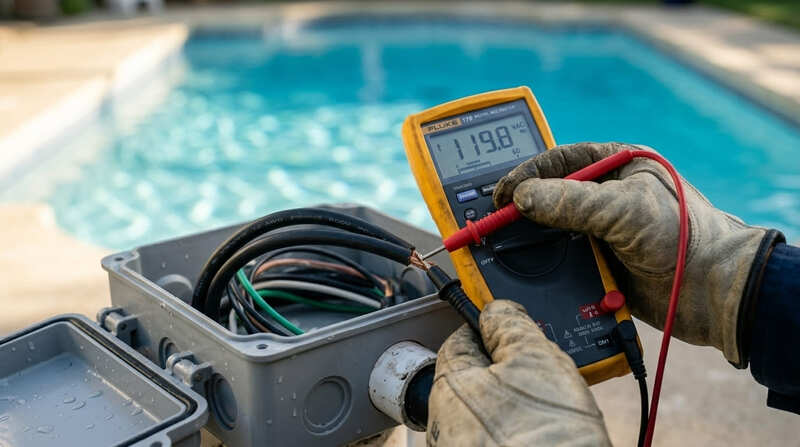
LED drivers are designed to operate within a narrow input voltage range. If your transformer outputs 12V, but you use thin 18 AWG wire over a 100-foot run, the light might only receive 9V by the time the power reaches the pool wall.
When the supply voltage falls below 10V, the LED driver cannot regulate current correctly. It constantly restarts itself, causing rapid flickering and color synchronization failures.
The fix is simple: Use thicker wire than you think you need. The extra material cost is a few dollars. The callback cost to replace a burned-out LED driver is hundreds.
The Golden Rule: Wire Size Chart for Distance and Wattage
There is no single AWG that works for every pool. The correct answer depends on two variables: Run Length (how far the wire travels from the transformer to the junction box) and Total Wattage.
Here is the professional reference chart for modern 12V LED pool light installations:
| Run Length (Transformer to J-Box) | Minimum AWG | Recommended AWG (Pro Choice) |
|---|---|---|
| 0 – 50 ft | 14 AWG | 12 AWG |
| 50 – 100 ft | 12 AWG | 10 AWG |
| 100 – 150 ft | 10 AWG | 8 AWG |
| Multi-light circuit | Calculate total load | Always go one size thicker |
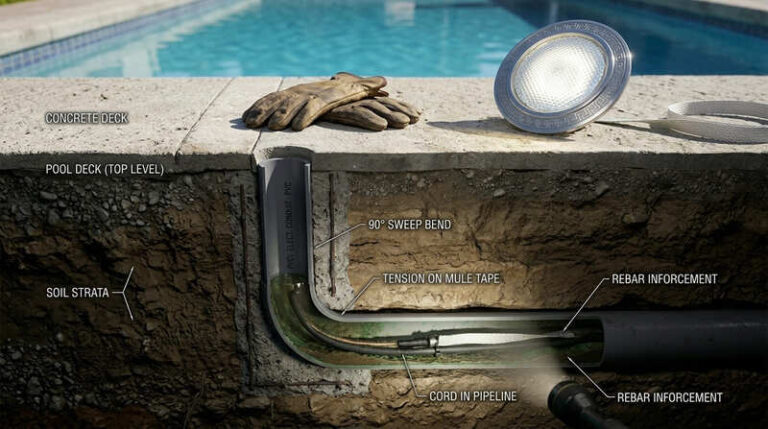
Pro Tip: Always measure the actual wire run length, not the straight-line distance. Wire follows conduit, which bends around corners and drops underground. Always add 10% to your measurement.
NEC Code Warning: Do Not Use Landscape Wire!
You are at the hardware store. You see a cheap roll of black 12-gauge outdoor landscape wire. It says "suitable for outdoor use."
Stop right there. Do not use it. It is a code violation that will fail inspection and potentially create a serious safety hazard.
NEC Article 680 governs all electrical installations in and around swimming pools. It requires that any wire run inside a conduit serving a pool light must be rated for wet locations — specifically THWN or THWN-2. It must also include a separate, insulated green ground wire.
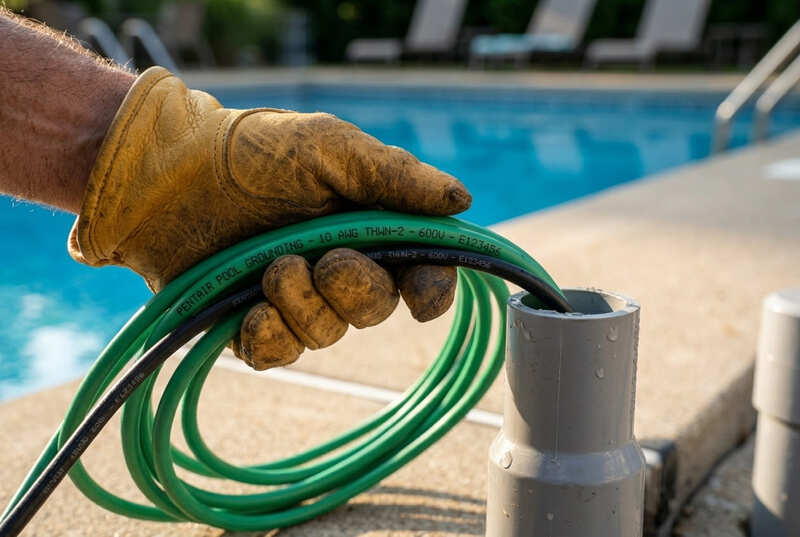
Underground pool conduit is a wet environment. Standard landscape wire is not built to sit in water for years. Its insulation will degrade, exposing bare copper to the water, causing constant GFCI tripping and severe shock hazards.
The Factory Seal: Why Your Light Comes With the Cord Attached
New DIYers often ask: "Can I just buy the light head and attach my existing underwater cord to it?"
The answer is absolutely NO.
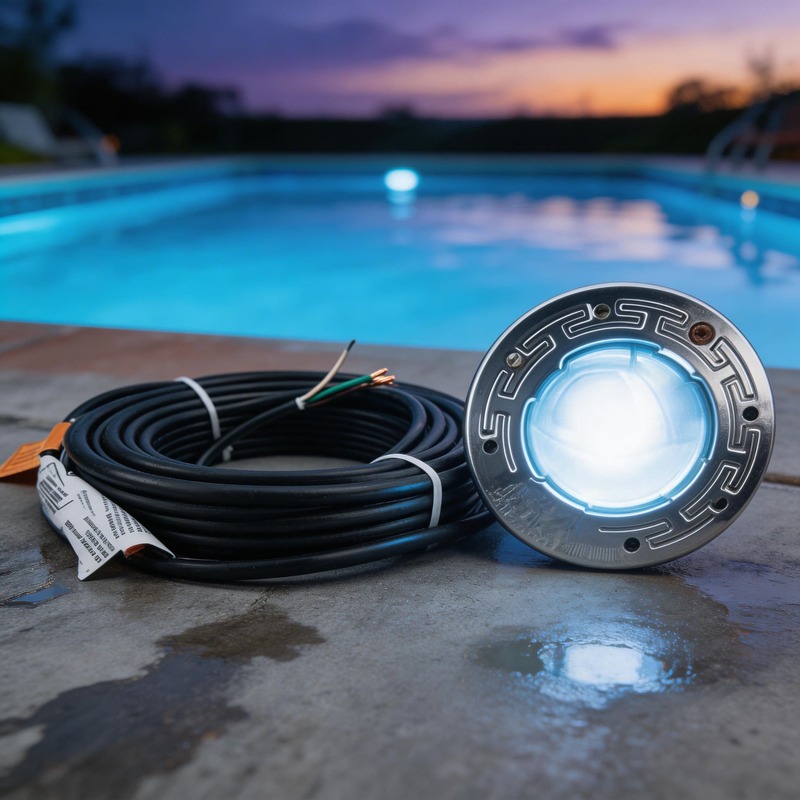
Every code-compliant pool light fixture comes with the power cord factory-sealed directly into the housing. This seal is the primary waterproof barrier. Any attempt to splice or attach a cord outside the factory (especially underwater) will fail and leak immediately.
All electrical connections for a pool light must be made inside a dry Junction Box (J-Box) located above the water line on the pool deck.
This means when you order a new pool light, you must order it with the correct cord length (e.g., 30ft, 50ft, 100ft, 150ft) to reach your J-box in one continuous, unbroken run. And remember to leave 3 to 4 feet of extra slack coiled inside the niche so you can service the light on the deck later!
Stop Rewiring for Flawed Designs (The Permanent Upgrade)
You have done the math. You purchased the expensive 12 AWG THWN-2 wire. You are prepared for a tough, sweaty conduit pull.
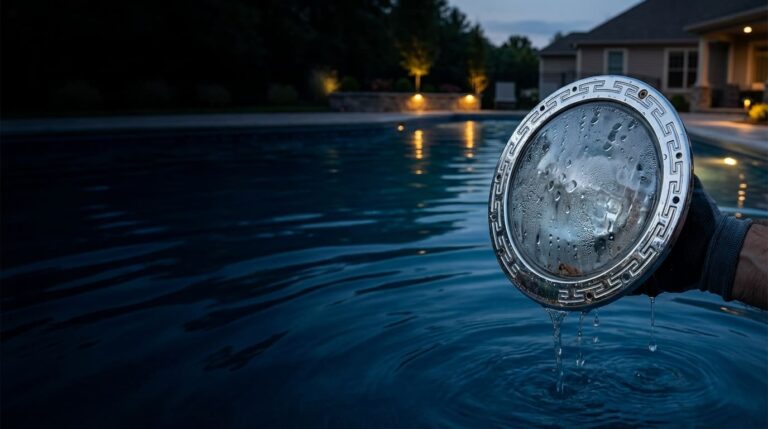
But ask yourself this: Why go through all this electrical hard work, just to install another hollow OEM light (like a standard Pentair GloBrite) that will suck in water due to thermal expansion and short out your PCB in two years anyway?
If you are replacing a 1.5-inch nicheless light, don't just upgrade your wiring—upgrade your fixture technology.
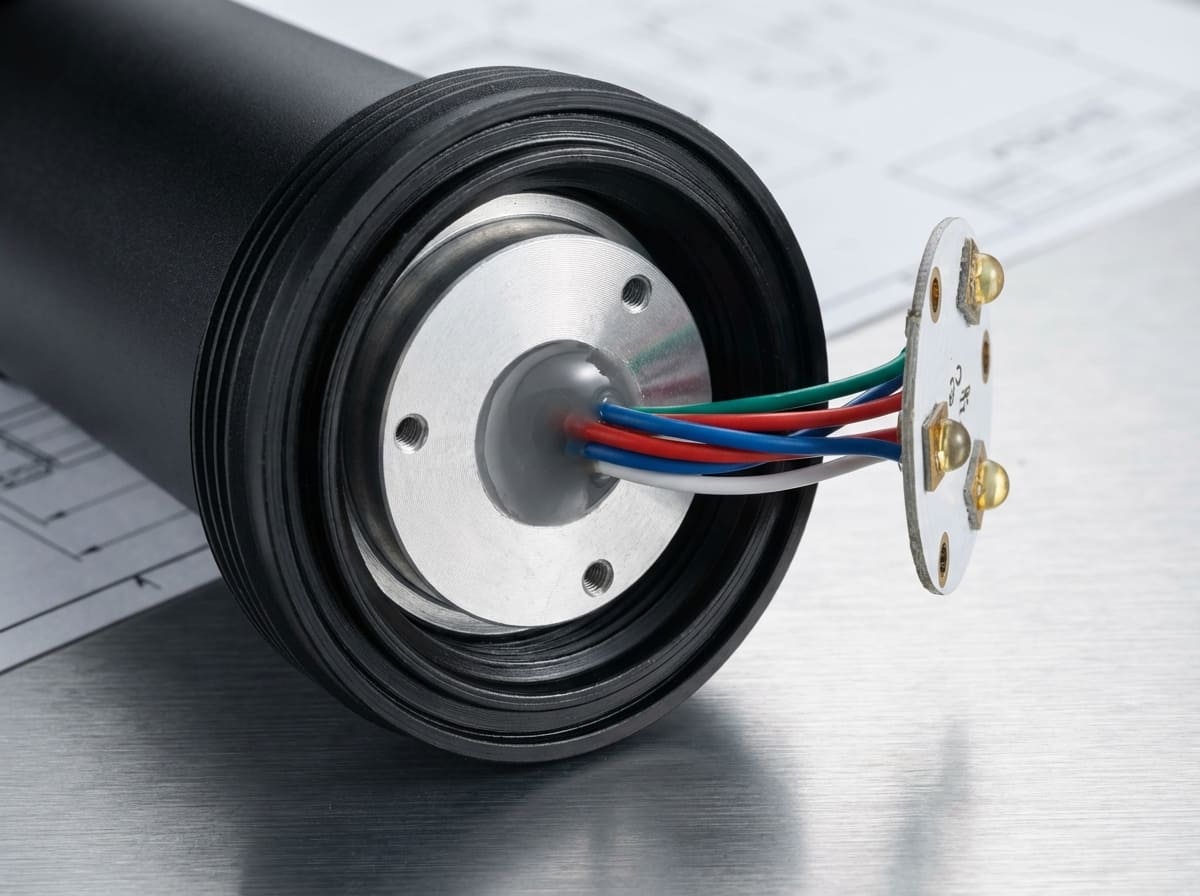
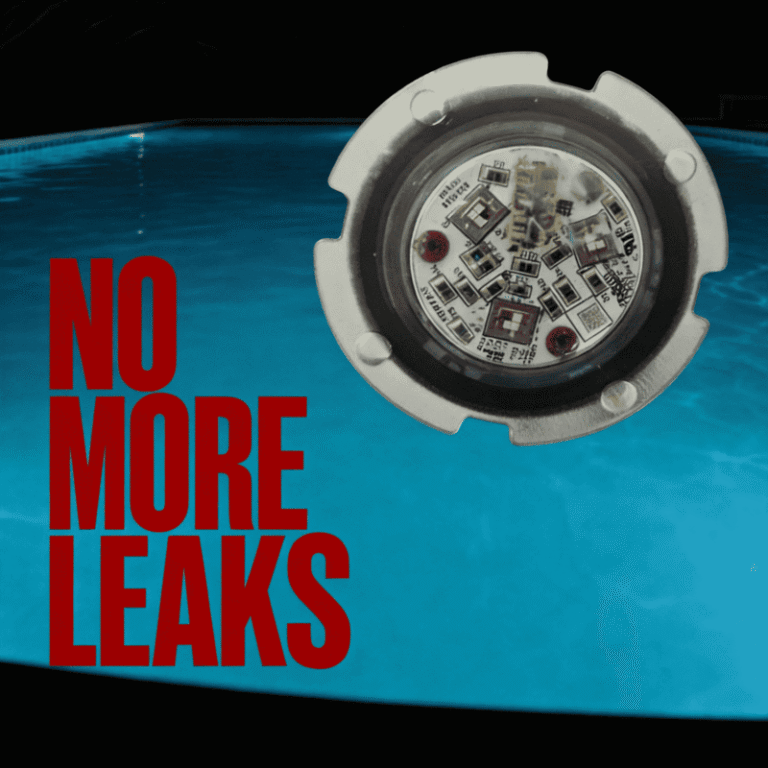
Our Upgraded Resin-Filled GloBrite Alternative completely eliminates water intrusion. The entire internal circuit board is cast inside a solid block of epoxy resin. There is no air gap, which means there is zero vacuum effect when the light cools down.
Furthermore, we use premium Tinned Copper Cords tailored to exact AWG standards for 30ft, 50ft, 100ft, and 150ft lengths. This guarantees zero voltage drop, ensuring your lights sync perfectly with Pentair automation systems every single time.
Do the job right, use the right wire, and install a light that actually lasts.
👉 Click Here to Shop Our Fully Compatible Resin-Filled LED Lights
✍️ About the Author
Howard Wang – Senior Product Engineer
With over 10 years of experience in the swimming pool equipment industry, Howard specializes in LED thermal management and waterproofing solutions. He works directly with US distributors and pool builders to diagnose electrical failures and develop reliable, resin-filled alternatives that permanently solve common OEM failure points.