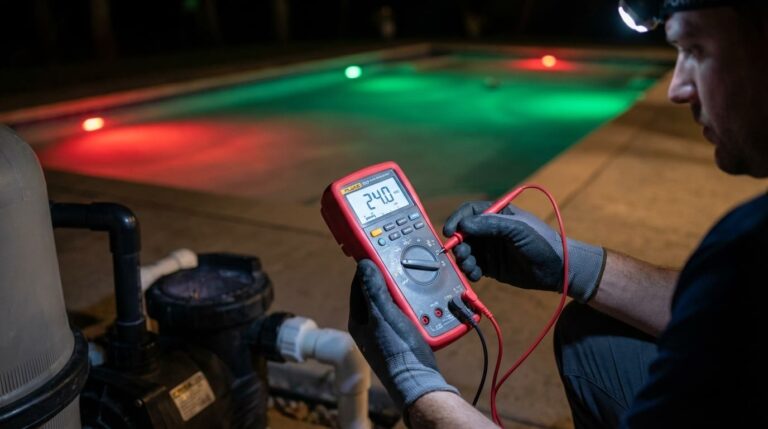
If you are a pool builder or service professional, your reputation is everything. But right now, homeowners on forums like Reddit and Trouble Free Pool are furious about expensive lights failing early. And unfortunately, they often blame the installer.
"I just paid a pool guy $450 to replace my 2-year-old GloBrite. He told me it's 'normal' for them to fail this fast. I'm never using this company again." — Real homeowner complaint on r/pools.
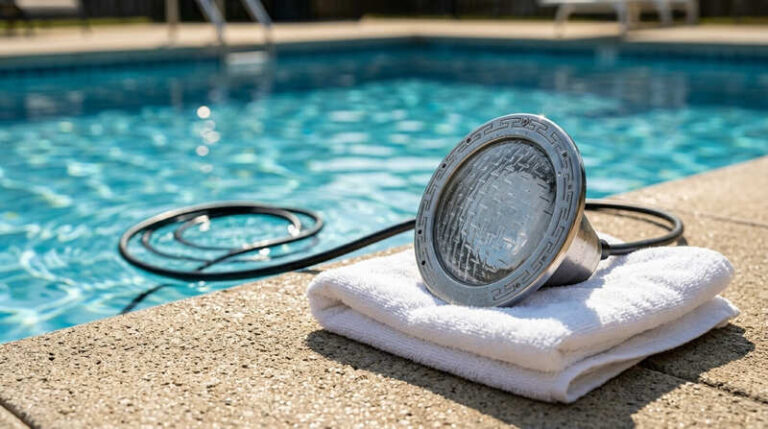
Users report consistent issues with the Pentair GloBrite housing cracking shortly after the warranty expires. This design flaw inevitably leads to water getting inside the GloBrite fixture, causing complete failure. The market is desperately searching for a reliable 1.5-inch pool light replacement that permanently solves this defect.
As an industry supplier, I have analyzed these failures deeply. It’s frustrating to see hard-working pool pros taking the blame for products that are fundamentally flawed by design.
Why Do These Lights Fail After 2.5 Years? (The Hairline Crack Issue)
You install a new light. It works perfectly. Then, two years later, the phone rings. Why does this always happen?
The failure comes from physics, not bad luck. The air inside the light heats up and cools down daily. This continuous thermal stress causes the plastic to snap, leading to a cracked housing.
I have seen this too many times. You pull a dead light out of the wall, and it looks fine at first glance. But look closer at the plastic casing. There is almost always a tiny longitudinal crack on the seam. I used to think it was just a bad batch. Now I know the truth: It is a fundamental design flaw.
(For a deeper technical dive into the exact teardown process, read our complete Pentair GloBrite failure analysis).
The OEM light is hollow inside. It is full of air. When the LED turns on, it generates heat, and the air inside expands, pushing out against the plastic shell. When the timer turns off, the cold pool water immediately cools the fixture. The air inside shrinks, creating a vacuum.
This happens every single night. Push. Pull. Push. Pull.
Plastic is not rubber. It experiences material fatigue and becomes brittle in chemically treated water. Eventually, it snaps, developing a hairline fracture on the back casing. Water gets in. The PCB board shorts out. It is not a matter of if, but when.
| Failure Stage | Physical Action | Result |
|---|---|---|
| Heat Cycle | LED On -> Air Expands | Pressure pushes outward on the housing. |
| Cool Cycle | LED Off -> Air Contracts | Vacuum pulls inward on the seals. |
| Material Fatigue | Repeated Stress | Plastic develops micro-cracks. |
| Final Failure | Water Intrusion | Water inside the light kills the PCB. |
Is the "Pool Settling" Excuse Real?
When you call for a warranty claim, manufacturers love to blame the installation environment. They tell your customer the pool structure moved. Do not let them pass the buck.
Tech support frequently claims "pool settling" crushed the housing. This is physically highly unlikely. Real structural settling would crack the gunite shell or the tile line, not just the light fixture. The damage actually comes from the internal pressure we just discussed.
Look closely at a failed unit. Sometimes you can see a longitudinal crack bulging outward on the plastic seam. But even if the micro-crack is invisible to the naked eye, the evidence of seal failure is undeniable once you look inside.
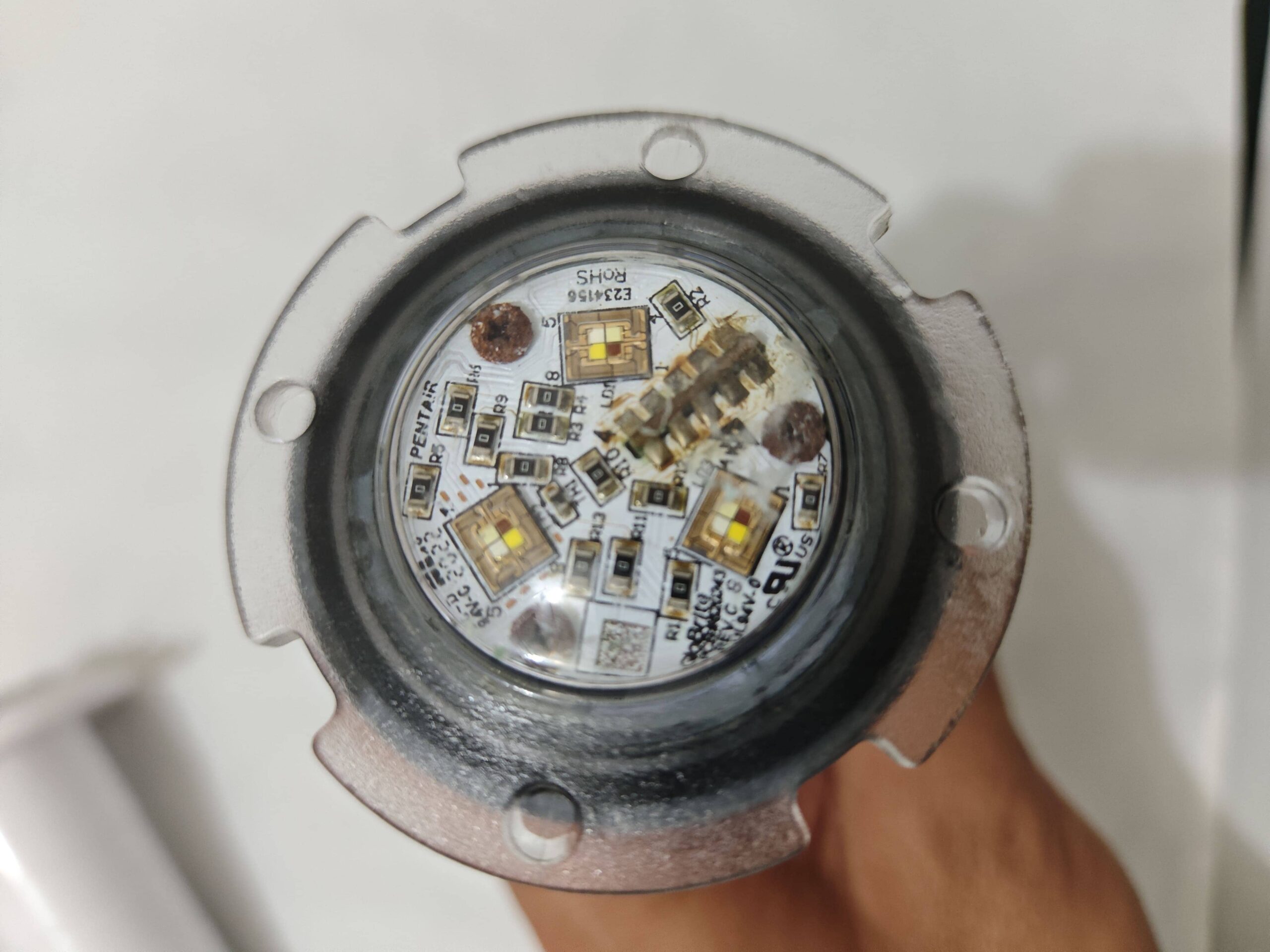
I recently read a thread where warranty support told a homeowner, "The concrete shifted and crushed the light housing." As industry professionals, we know the physics just don't add up.
Think about it: The pool shell is thick gunite and plaster—a massive, solid structure. If the ground moved enough to physically crush a plastic light niche, you would have a disaster. You would lose water, and the deck would heave. You cannot have a "settled pool" that only breaks a light bulb and nothing else. The internal rust proves the factory seal failed due to thermal cycling, not concrete shifting.
The Permanent Fix: Resin-Filled Technology vs. Plastic Housing
You cannot fix a bad design by replacing it with the exact same hollow part. You need to change the physics. You must remove the air.
Watch our teardown and installation video below to see exactly why the OEM seal fails, and how our upgraded design solves it permanently:
Watch our teardown and installation video below to see exactly why the OEM seal fails, and how our upgraded design solves it permanently:
If you aretired of replacing your Pentair GloBrite, meet the reliable, fully compatible alternative that was engineered specifically to protect dealer profit margins.
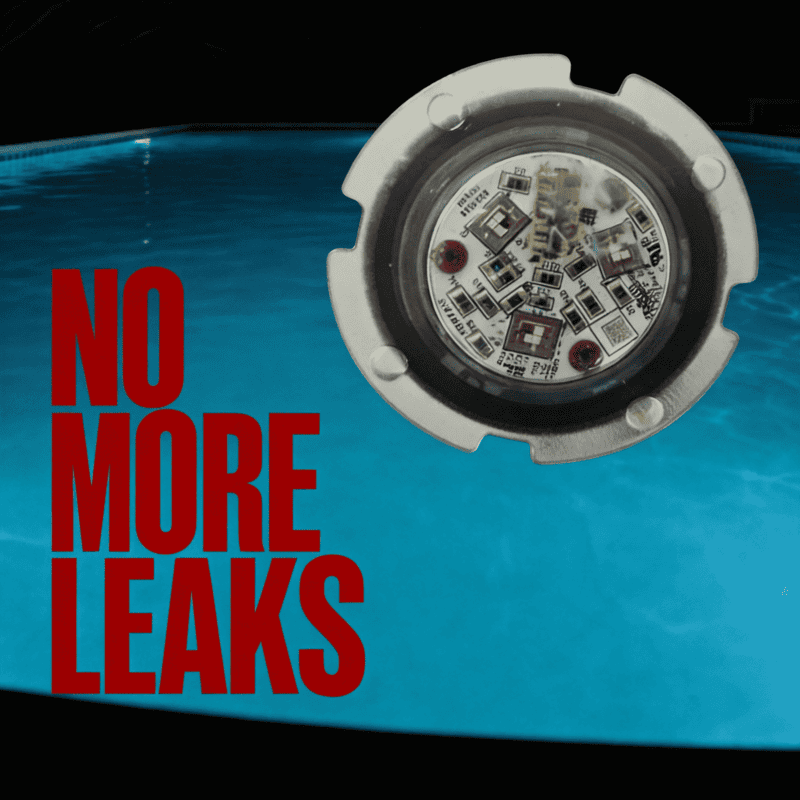
The most durable 1.5-inch pool light replacement on the market today uses fully encapsulated resin technology. This solid-state design eliminates air pockets entirely, stopping thermal expansion and preventing water intrusion permanently.
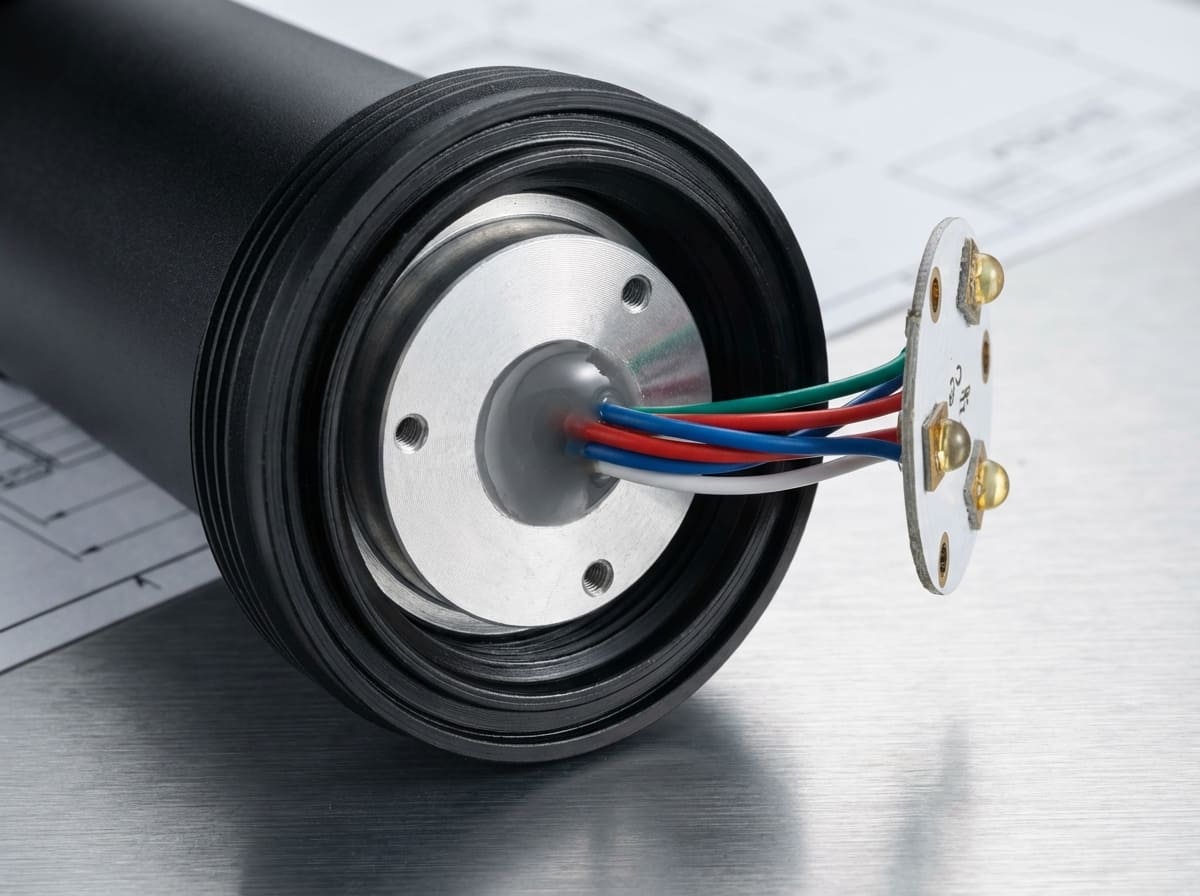
In our upgraded manufacturing process, we do not leave the housing empty. We take the LED board and pour liquid epoxy resin over it until it fills every single gap. It hardens into a solid block. The light and the housing become one solid piece.
Why does this matter for pool builders?
Solid resin does not expand or contract like a gas. When the light gets hot, there is zero pressure pushing on the plastic housing. When it gets cold, there is no vacuum pulling on the seals. No pushing. No pulling. No fatigue.
More importantly, water physically cannot get in. Even if the outer shell is somehow scratched, the electronics are buried deep inside a solid block of resin. There is no air gap for water to fill. This breaks the cycle of the "two-year callback."
| Feature | Hollow Light (OEM Old Tech) | Resin-Filled Light (Our Upgraded Tech) |
|---|---|---|
| Internal Structure | Air + Electronics | 100% Solid Resin Block |
| Thermal Expansion | High (Causes casing cracks) | Zero (Physically Stable) |
| Water Risk | High (Leaks through cracks) | None (Fully Encapsulated) |
| Return Rate | High after warranty ends | Near Zero (Zero Call-backs) |
Conclusion: Protect Your Profits and Your Reputation
Stop accepting the "pool settling" excuse. The real killer of nicheless lights is thermal expansion in hollow housings.
It’s time to switch to a fully compatible, resin-filled alternative to eliminate leaks, keep your customers happy, and save your profit margins.
Ready to stop the callbacks for good?
Don't just take our word for it. Test the solid-resin difference yourself.
- Wholesale Pricing: Available for pool builders and distributors.
- Sample Testing: Contact us to request a sample pack for your service trucks.
👉 Click Here to View the Upgraded GloBrite Compatible LED Light
📧 Email us at: [[email protected]]
📱 WhatsApp: [+86-153 2201 0110]
✍️ About the Author
Howard Wang – Senior Product Engineer
With over 10 years of experience in the swimming pool equipment industry, Howard specializes in LED thermal management and waterproofing solutions. He works directly with US distributors and contractors to develop resin-filled alternatives that solve common OEM failure points.