If your Pentair GloBrite flashes once when you turn it on and then goes completely dark, you are not alone. This is one of the most common LED pool light failure symptoms I see in the field, and it almost always points to a problem inside the fixture itself, not the controller or transformer.
Quick Answer
A GloBrite that flashes once and shuts off is usually failing internally. The most common cause is water intrusion near the cable entry, which damages the LED driver or internal electronics. When power is applied, the LEDs flash briefly before the damaged circuit shuts down.
In some cases, the light will work again after sitting powered off for several minutes, then fail the same way. This intermittent behavior is a strong sign of internal failure rather than a transformer or automation issue.
Replacement is usually the right answer. The GloBrite is a sealed fixture and is not designed for field repair.
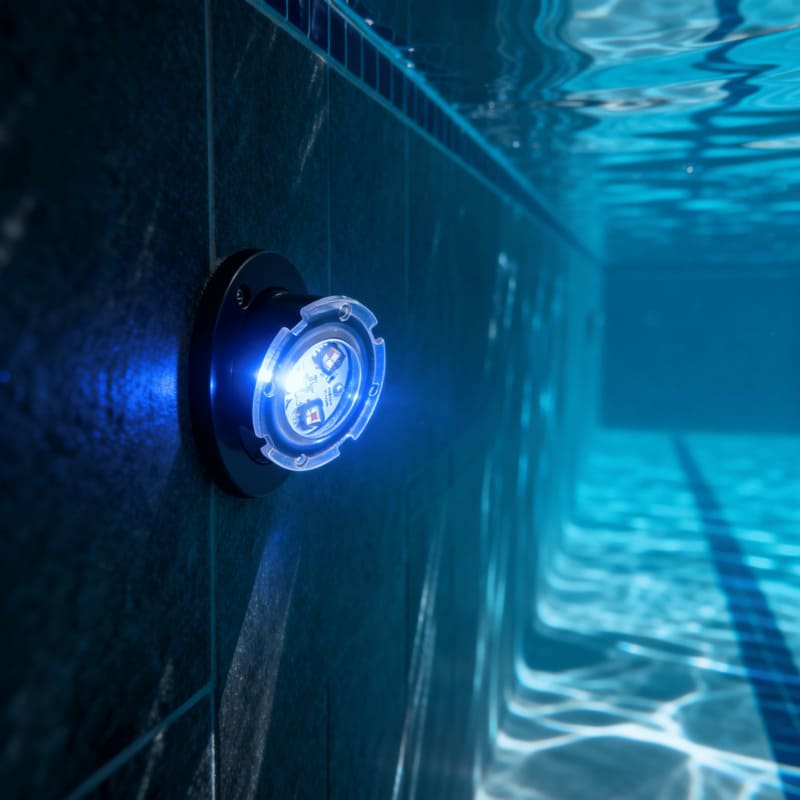
What Usually Causes a GloBrite to Flash Once and Die?
In my experience, when a GloBrite flashes once and dies, the failure is almost always inside the light. The single flash is the LED driver attempting to start, then immediately shutting down because something on the board is faulted, shorted, or moisture-affected.
Common patterns I have seen on service calls:
- Light flashes once on power-up, then nothing
- Light works for a few seconds, then quits
- After a long off period, it flashes again briefly, then stops
- Color sync is lost before complete failure
- The light dims to a weak blue before shutting off entirely
Many pool owners initially blame the automation system or GFCI. But if the GFCI is not tripping and the transformer is putting out the correct voltage, the fixture is the suspect.
Heat plays a big role here. Spa installations and shallow sun-exposed pools see the most failures. Repeated thermal cycling stresses seals and solder joints, and over time the fixture's internal protection trips faster and faster until it stops working entirely.
Is Water Intrusion the Real Problem?
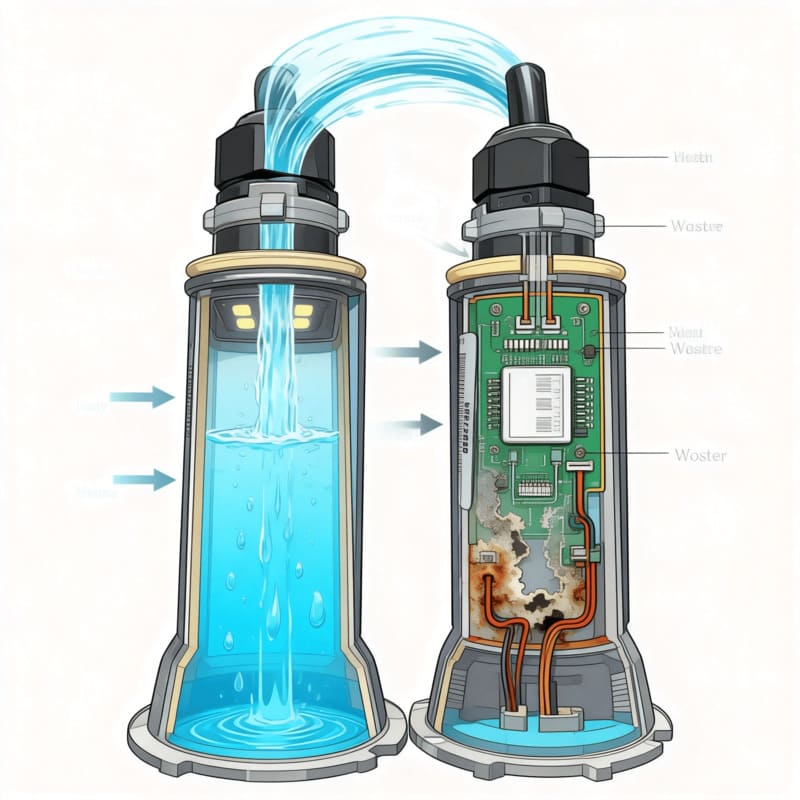
In most failed GloBrite units I have inspected, moisture had entered the fixture. The most common entry point is near the cable gland or where the cord meets the housing. Once water reaches the LED driver, you get exactly this kind of behavior — the unit powers up just long enough to detect a fault, then shuts down.
Signs of water intrusion you can check before pulling the niche:
- Condensation or fog visible behind the lens
- Discoloration or cloudiness on the inside of the lens
- Corrosion or green tint on the cord near the fixture
- A heavier, water-logged feel when the light is removed from the niche
Water intrusion does not always mean a cracked housing. Repeated heat cycles can compress and degrade the seal over time, especially in spas where temperatures swing dramatically. Once the seal is compromised, the fixture is finished — there is no reliable way to dry and reseal it in the field.
Several homeowners on pool forums have reported seeing condensation or moisture inside the lens before the light eventually failed completely. Others noticed the light becoming dim, losing color synchronization, or flashing briefly before going dark. While the exact failure mechanism varies, water intrusion remains one of the most frequently observed root causes.
How Can You Diagnose the Problem Before Replacing the Light?
Before assuming the fixture is dead, run a structured check. This avoids the embarrassment of replacing a $400+ light when the real problem was a $30 component upstream.
Step-by-step diagnosis:
-
Check the GFCI and breaker. Reset both. If the GFCI trips immediately when the light is energized, you almost certainly have water intrusion or a shorted driver.
-
Verify transformer output. Measure voltage at the transformer output with a multimeter. GloBrite runs on low voltage — confirm you are getting the correct voltage at the secondary side.
-
Measure voltage at the niche. Disconnect the light and measure voltage at the supply leads. If voltage is correct here but the light flashes and dies, the fixture is the problem.
-
Inspect the cord and lens. Pull the light out of the niche. Look for moisture, corrosion, or cloudiness behind the lens.
-
Test on a known-good transformer. If you have a spare transformer or another working pool light circuit, swap and retest. This rules out the power supply entirely.
-
Let it cool down. Some failing units recover after 10-30 minutes of being powered off. If the symptom is repeatable after a cooldown, that is a classic internal thermal-protection failure pattern.
Document each step. If you eventually file a warranty claim, this record matters.
Can a Bad Transformer Cause the Same Symptoms?
Yes, but the failure pattern is different, and this is where many technicians go wrong.
| Symptom | Likely Fixture Failure | Likely Transformer Failure |
|---|---|---|
| Single flash then off | ✅ Very common | ❌ Rare |
| Trips GFCI immediately | ✅ Common | ❌ Uncommon |
| Voltage low at output | ❌ No | ✅ Yes |
| Multiple lights affected | ❌ No | ✅ Yes |
| Recovers after cooldown | ✅ Common | ❌ Rare |
| Visible moisture in lens | ✅ Yes | ❌ No |
A failing transformer typically produces low or unstable voltage that affects every light on the circuit. If you only have one GloBrite on the system and it flashes and dies, the transformer is rarely the cause — but you should still confirm output voltage before condemning the fixture.
I have also seen automation relays cause flickering or short cycling, but not the classic "flash once and die" symptom. That signature behavior is almost always internal.
Should You Repair the Light or Replace It?
In most cases, replacement is the practical solution.
GloBrite fixtures are sealed units. Once moisture reaches the internal electronics, there is no reliable field repair that restores long-term waterproof integrity.
If the light flashes once, shuts off repeatedly, and voltage tests confirm the power supply is healthy, replacing the fixture is usually faster and less expensive than spending hours chasing intermittent failures.
Most contractors I know consider replacement the right choice when:
- Water intrusion is visible
- The fixture repeatedly shuts down after startup
- The light is more than 2-3 years old
- Multiple troubleshooting steps have already failed
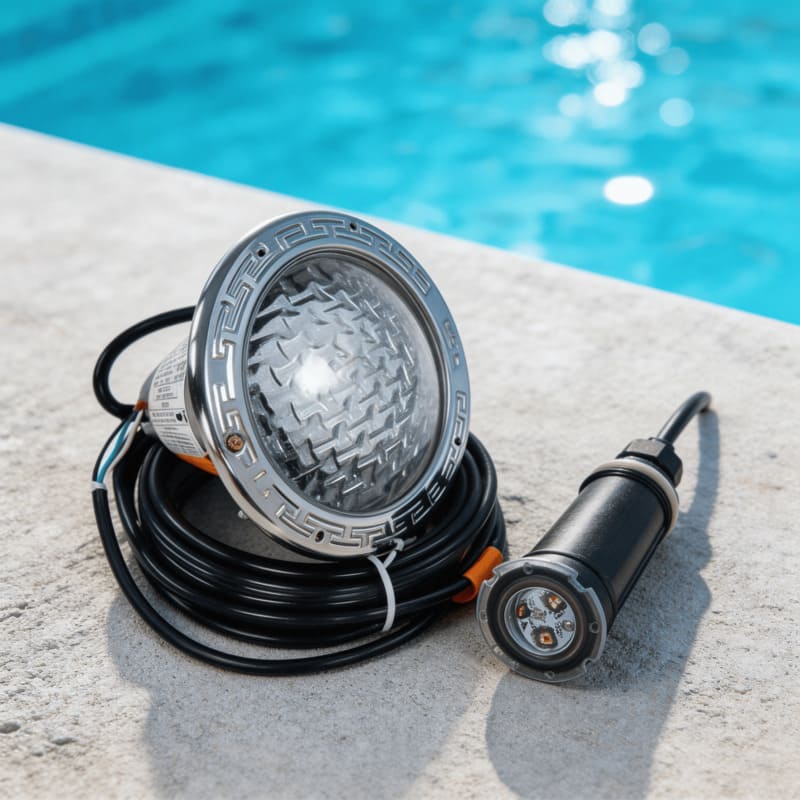
For pool owners comparing replacement options, there are now compatible alternatives that fit the existing GloBrite niche and operate from the same 12V transformer.
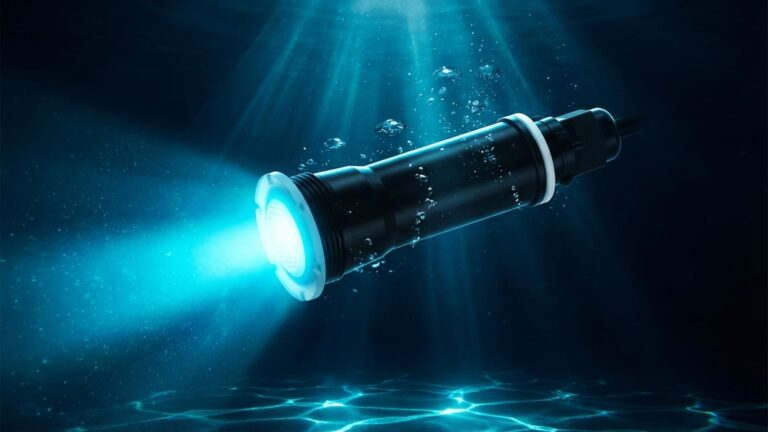
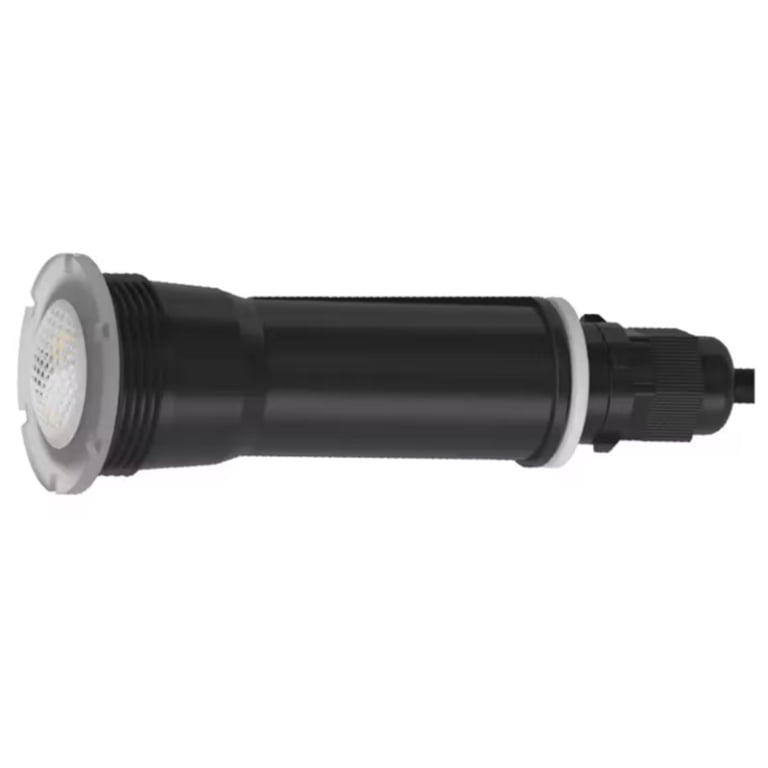
One example is the *CP-FC-PC55*, which was developed specifically as a direct replacement for failed GloBrite installations. It uses a fully resin-filled waterproof structure and installs without modifying the existing niche, conduit, or transformer system.
Before replacing any light, I still recommend verifying transformer output and inspecting the cord condition. A five-minute voltage check can prevent an expensive misdiagnosis.
FAQ
Why does my GloBrite work for a few minutes then shut off?
This usually means the internal driver is overheating or partially water-damaged. The unit runs until thermal protection trips, then shuts down. After cooling, it may run again briefly. This is a terminal failure pattern and replacement is usually required.
Can I dry out a GloBrite that has water inside?
No. Once moisture enters the housing, the internal electronics are compromised. Even if the light temporarily works again, corrosion continues and long-term reliability cannot be restored.
Will a new transformer fix a flashing GloBrite?
Usually not. If only one light is affected and transformer voltage tests normal, the fixture itself is the more likely failure point.
Is the single flash a sign the GFCI is bad?
No. The flash simply shows the fixture is attempting to start. A faulty GFCI typically presents different symptoms such as nuisance tripping or loss of power.
How long should a GloBrite last?
Actual lifespan varies by installation conditions. In hot climates and spa environments, many contractors report failures occurring sooner than expected due to heat and moisture exposure.
Are aftermarket replacement lights reliable?
Quality varies by manufacturer. The most important factors are waterproof design, thermal management, compatibility, and warranty support.
Conclusion
A Pentair GloBrite that flashes once and shuts off is usually experiencing internal failure rather than a transformer or automation problem. Proper diagnosis can prevent unnecessary part replacement, but once moisture or thermal damage develops inside the fixture, replacement is typically the most practical solution.
About the Author
Howard Wang is a senior product engineer with over 10 years of experience in pool lighting systems, waterproof structures, LED thermal management, and long-term product reliability.