Water intrusion is one of the most common reasons GloBrite pool lights fail in the field. But after inspecting failed units and reviewing customer feedback over the years, the real cause is rarely what pool owners initially assume.
Many people believe the lens suddenly cracked or a gasket failed overnight. In reality, water intrusion is usually a gradual process that develops over months through thermal cycling, seal degradation, and moisture entering vulnerable areas of the fixture.
By the time a GloBrite begins flickering, losing color synchronization, or shutting off completely, the damage has often been developing for a long time.
Quick Answer
Water intrusion in GloBrite pool lights is typically caused by gradual seal degradation around the cable entry, rear housing, or other vulnerable areas of the fixture.
As moisture enters the hollow internal cavity, condensation begins forming around the electronics. The first component affected is usually the LED driver board rather than the LED chips themselves.
Once moisture reaches the driver electronics, symptoms often progress from fogging and intermittent operation to color-sync issues, flickering, and complete failure.
Where Does Water Usually Enter a GloBrite Light?
Most water intrusion failures do not start at the lens, even though the lens is what homeowners look at first.
Based on field inspections of failed units, the most common entry points are:
- Cable entry at the rear of the fixture – the most common failure point
- Rear housing seal – where the back cover meets the main body
- Cord jacket damage – cuts, kinks, or abrasion along the cord run
- Lens-to-body gasket – usually only after years of compression set
- Strain relief area – where cord movement stresses the seal over time
- Housing cracks – often discovered only after the fixture is removed from the niche
The cable entry is especially vulnerable because it experiences mechanical stress from cord movement, thermal expansion, and water pressure changes. Every time the light heats up and cools down, the materials around the cable entry expand and contract at slightly different rates.
Another failure mode that deserves attention is housing cracking.
Many homeowners assume a cracked housing must have been caused by impact damage. However, based on customer photos and failed-unit inspections, I have seen numerous fixtures develop cracks without any obvious signs of external impact.
One possible explanation is long-term thermal cycling. GloBrite lights use a hollow-body design with an internal air cavity. As the fixture repeatedly heats up during operation and cools down afterward, the housing experiences continuous expansion and contraction. Over time, this cyclic stress may contribute to material fatigue and cracking in certain installations.
Once a crack forms, even a very small one, water intrusion can accelerate rapidly.
Lens cracks do occur, but in many field cases the more significant issue is cracking elsewhere in the housing or around high-stress sealing areas. By the time visible moisture appears behind the lens, water may have already been entering the fixture for months.
Why Do So Many GloBrite Lights Develop Water Intrusion?
The biggest contributor is thermal cycling.
GloBrite fixtures use a hollow-body design that contains an internal air cavity surrounding the electronics.
Every operating cycle creates a repeating pattern:
- LEDs generate heat
- Internal air expands
- The fixture cools after shutdown
- Internal air contracts
This process repeats thousands of times throughout the life of the light.
Over time, thermal expansion and contraction place continuous stress on:
- Housing seals
- Cable-entry seals
- Cord strain relief components
- Internal adhesive joints
Eventually moisture begins entering areas that were originally sealed.
One observation I have consistently made is that hollow-body pool lights give moisture a place to accumulate.
Once moisture vapor enters the housing, condensation forms on the coolest internal surfaces — often directly around the driver electronics.
Spa installations are particularly vulnerable because they experience:
- Higher water temperatures
- Faster thermal cycling
- More frequent on/off operation
This is one reason spa-mounted GloBrite fixtures often fail earlier than identical fixtures installed in standard swimming pools.
Based on customer reports and field observations, many moisture-related failures appear much earlier than the long LED lifespan ratings often referenced in marketing materials.
In real-world installations, especially spas and warm-climate pools, symptoms can begin appearing within 1–3 years.
What Usually Happens Before Complete Failure?
Water intrusion rarely causes an immediate failure.
Instead, the failure process usually follows a predictable pattern:
- Seal degradation begins
- Moisture vapor enters the housing
- Lens fogging develops
- Driver board corrosion starts
- Color synchronization problems appear
- Flickering or intermittent operation occurs
- The light becomes stuck on one color or flashes briefly
- Complete fixture failure follows
This process often takes months rather than days.
Many pool owners notice warning signs long before the light stops working entirely.
Unfortunately, these symptoms are often ignored because the light still appears functional.
What Are the Early Warning Signs of Water Intrusion?
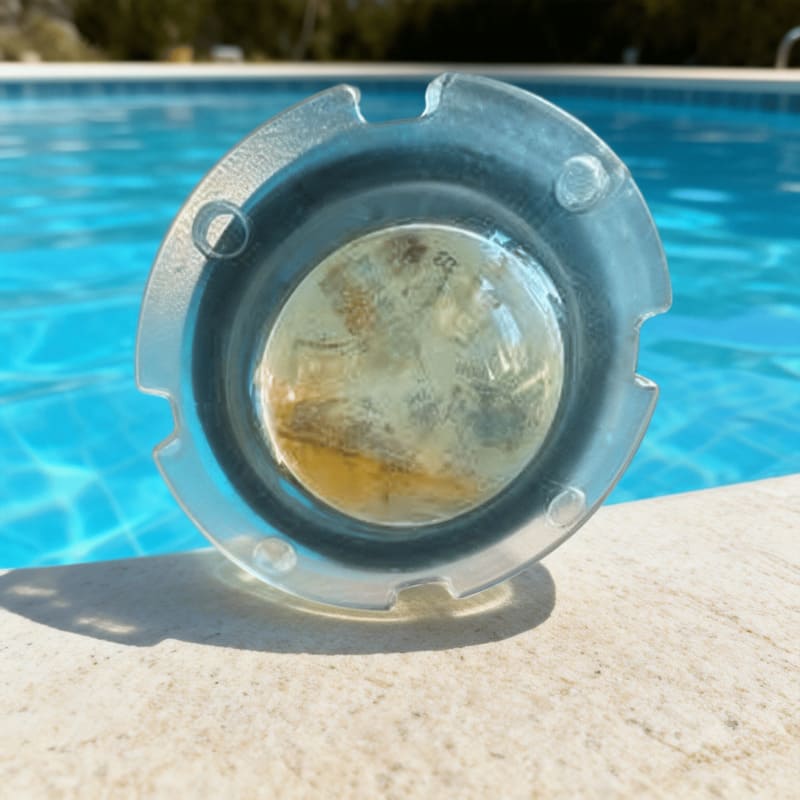
The most overlooked warning sign is lens fogging.
Many homeowners assume fogging is simply cosmetic.
It is not.
Fogging indicates that moisture vapor has already entered the fixture and is condensing inside the housing.
Other warning signs include:
- Intermittent flickering
- Delayed startup
- Random color changes
- One light falling out of sync with others
- Dim output compared to neighboring lights
- Brief flashes before shutting off
- Occasional GFCI trips
When these symptoms appear, the LEDs themselves are often still healthy.
The component usually failing first is the driver board.
Driver electronics contain:
- Capacitors
- Control ICs
- Solder joints
- Low-voltage circuitry
These components are far more sensitive to moisture than the LED chips.
Once corrosion begins, the failure process accelerates rapidly.
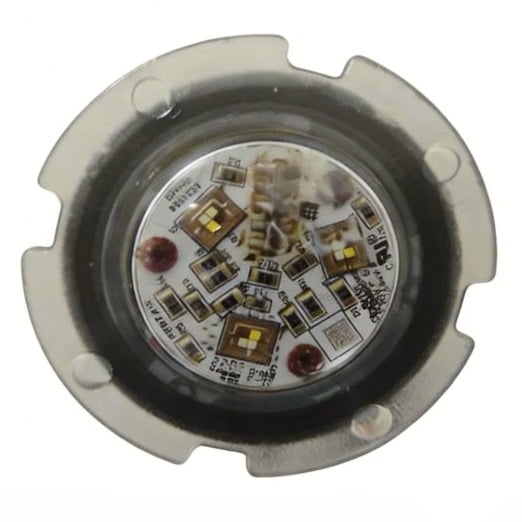
Can a Water-Damaged GloBrite Be Repaired?
In most cases, no.
Once moisture reaches the electronics, there is no reliable field repair that restores the fixture to its original condition.
Several factors make repair impractical:
The Original Seal Cannot Be Recreated
Factory-sealed fixtures are assembled and tested under controlled conditions.
Even a carefully applied field repair cannot reproduce the original sealing system.
Corrosion Continues After Drying
Drying removes visible moisture but does not reverse microscopic corrosion already present on electronic components.
Corrosion continues spreading even after the fixture appears dry.
Replacement Electronics Are Not Practical
Driver boards are not commonly available as service parts, and compatibility between revisions is difficult to verify.
Safety Matters
Pool lights operate in a wet environment where electrical safety is critical.
Attempting to repair a compromised underwater fixture creates liability that most professionals simply avoid.
For this reason, replacement is typically the most practical long-term solution.
When replacing a failed GloBrite, the existing niche normally remains in service.
Unless the niche itself is physically damaged, replacement is usually limited to the light fixture and cord assembly.
For customers evaluating replacement options, it may also be worth considering different internal construction methods.
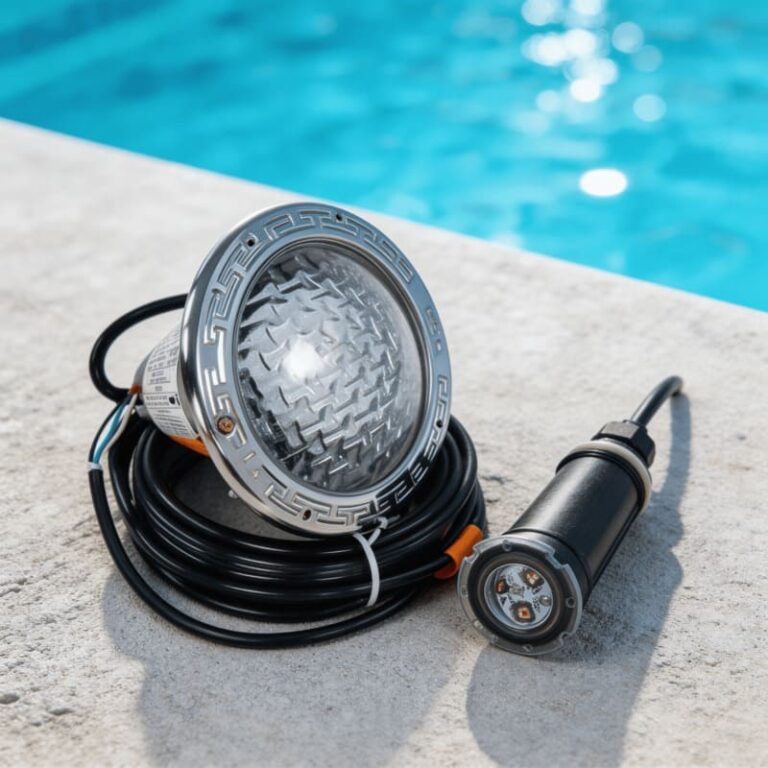
For example, the Laze Pool CP-FC-PC55 GloBrite replacement light uses a fully resin-filled architecture rather than a hollow internal cavity. The electronics are encapsulated in thermally conductive resin, eliminating the empty air space where condensation typically forms.
Because the driver board is fully surrounded by potting material, moisture cannot accumulate around sensitive electronic components in the same way it can inside traditional hollow-body fixtures.
The thermally conductive resin also helps transfer heat away from the LEDs and driver electronics, improving overall thermal management.
As a practical consideration, compatible replacement lights can often cost significantly less than OEM fixtures, sometimes around one-third of the OEM replacement price depending on the market.
When replacing any failed pool light, I recommend:
- Inspecting the cord during removal
- Checking the junction box for moisture
- Verifying GFCI operation
- Confirming conduit integrity
- Recording the installation date for future reference
A proper replacement is almost always more reliable than attempting a repair.
FAQ
How long should a GloBrite pool light last?
Manufacturer lifespan ratings are based on LED component testing, not necessarily real-world pool environments.
Based on customer reports and field experience, many GloBrite failures occur within 1–3 years, particularly in spas, hot climates, and installations with frequent thermal cycling.
Is fogging inside the lens a real problem?
Yes.
Fogging indicates moisture vapor has already entered the housing. It is one of the earliest signs that the sealing system has been compromised.
Why does my GloBrite work sometimes but not others?
Intermittent operation is often caused by moisture-related damage to the driver board. The light may continue working temporarily before failing completely.
Does saltwater accelerate GloBrite failure?
Saltwater does not directly cause the leak, but once moisture enters the housing, salt contamination can accelerate corrosion of electronic components.
Can I dry out a wet GloBrite and continue using it?
No.
Drying removes visible moisture but does not stop the corrosion already occurring inside the fixture.
Are resin-filled pool lights more reliable?
A fully resin-filled design eliminates the internal air cavity where condensation typically forms. This removes one of the most common moisture-related failure mechanisms found in hollow-body pool lights, although overall reliability still depends on materials, thermal management, and installation quality.
About the Author: Howard Wang is a Senior Product Engineer with over 10 years of experience in the swimming pool equipment industry, specializing in underwater LED lighting systems, waterproofing structures, thermal management, and contractor-focused troubleshooting solutions.