A Pentair pool light stuck on white is one of the most common service calls I get during summer. Most owners assume the LED is dead or the controller is broken, but the real cause is usually much simpler — and often fixable without replacement.
Quick Answer
A Pentair pool light stuck on white is usually caused by a power interruption during the color-changing sequence, which leaves the light in its default white mode. In most cases, you can recover the light by performing a specific on/off reset sequence to resync it with the controller.
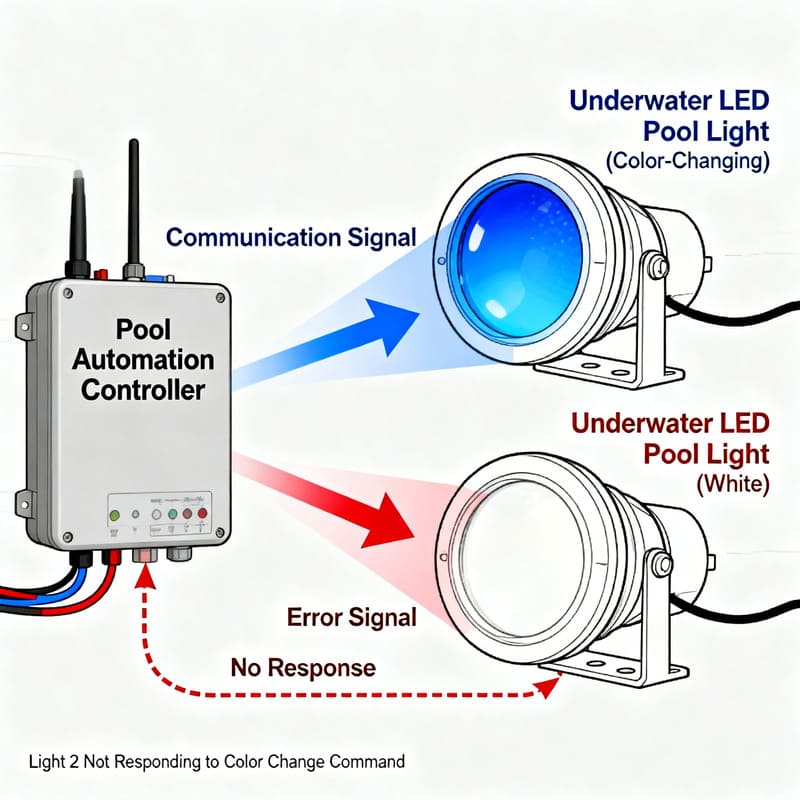
If only one light is stuck while others on the same circuit change colors correctly, the problem is inside that fixture, not the controller. If all lights are stuck on white, the issue is almost always upstream — automation timing, a relay, or the transformer.
Replacement is only needed when the fixture fails to respond to a proper reset sequence after multiple attempts.
What Causes a Pentair Pool Light to Get Stuck on White?
Pentair color LED lights — IntelliBrite, GloBrite, and MicroBrite — use timed power interruptions to cycle through colors and shows. The driver inside the fixture counts how long power has been off and uses that timing to decide which color or program to display next.
When that timing gets disrupted, the light defaults to white. White is essentially the light's fail-safe startup mode.
Common reasons a Pentair light ends up locked on white:
- A brief power blip during a color sequence
- Automation system cycling the light too quickly or too slowly
- A relay chattering or bouncing on startup
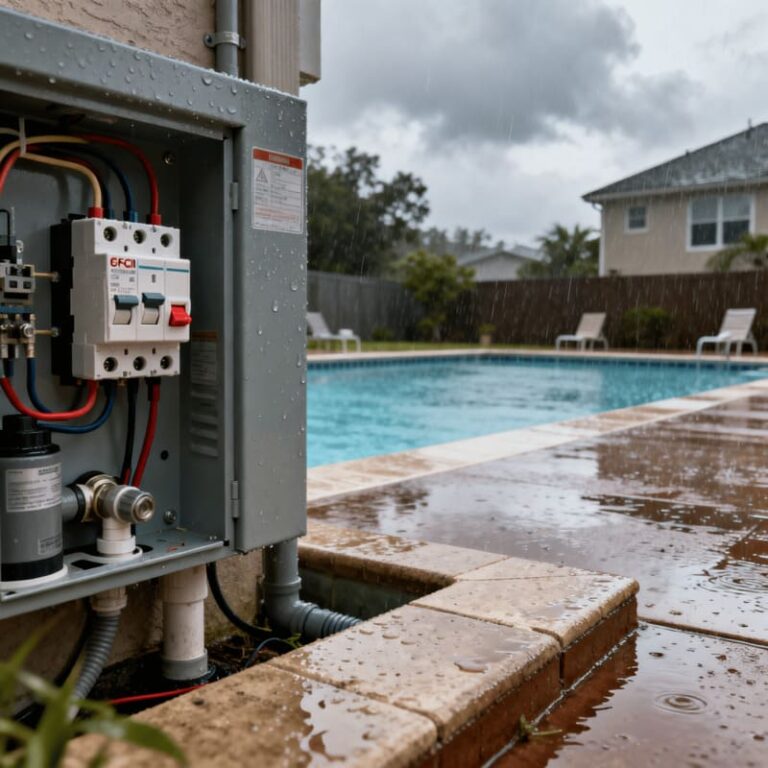
- GFCI tripping mid-cycle
- Multiple lights falling out of sync after a power outage
- An aging fixture losing its internal timing reference
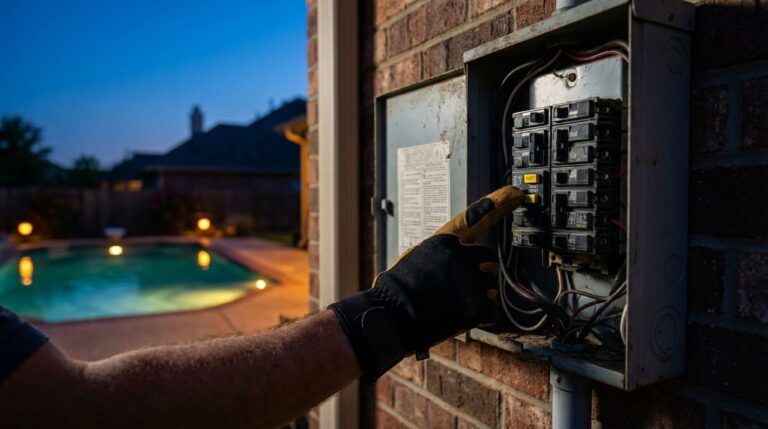
In the field, I see this most often after a storm or after a homeowner manually flips the breaker. The light comes back on, but it comes back on white and stays there.
If only one fixture is affected, the internal driver in that specific light has lost its place in the sequence — or it is starting to fail. If every light on the circuit is white, the problem is usually upstream.
Can Automation Systems Cause a Pool Light to Stay White?
Yes — and this is where many contractors overlook the real fix.
Pentair lights expect specific on/off timing to advance through colors and shows. If your automation system (IntelliCenter, EasyTouch, or a third-party controller) is sending pulses that are too short, too long, or inconsistent, the light may not register the command correctly and will revert to white.
Common automation-related causes:
- Light circuit assigned to a generic relay instead of a color-light feature
- Relay configured with the wrong light type
- Schedule turning the light off and on faster than the fixture can process
- Manual overrides interrupting an active color program
- Outdated controller firmware
I have walked into installations where the previous technician assigned the light to a generic relay instead of selecting the correct Pentair light type in the menu. The light powered on normally but never received the proper color commands, so it remained white.
Always verify that the controller is configured for the exact light model installed in the pool. This single setting solves more "stuck on white" calls than many contractors realize.
How Do You Troubleshoot a Pentair Light That Won't Change Colors?
Work from the easy checks to the more involved ones. Most service calls are resolved before the fixture ever needs to be removed.
Step 1: Identify the Scope
Is one light stuck, or are all lights stuck?
- One light affected = likely fixture issue
- Multiple lights affected = likely controller, relay, or transformer issue
Step 2: Perform a Color Reset Sequence
Pentair color lights can often be resynchronized with a manual power-cycle sequence.
General process:
- Turn the light off for at least 10 seconds
- Turn it on briefly, then off again
- Repeat the on/off pulses as required
- Follow the specific reset procedure for your light model
If the light advances through colors during manual cycling, the fixture is usually fine and the automation system should become the primary suspect.
Step 3: Check Controller Configuration
Verify:
- Correct light type selected
- Proper relay assignment
- No conflicting schedules
- No recent programming changes
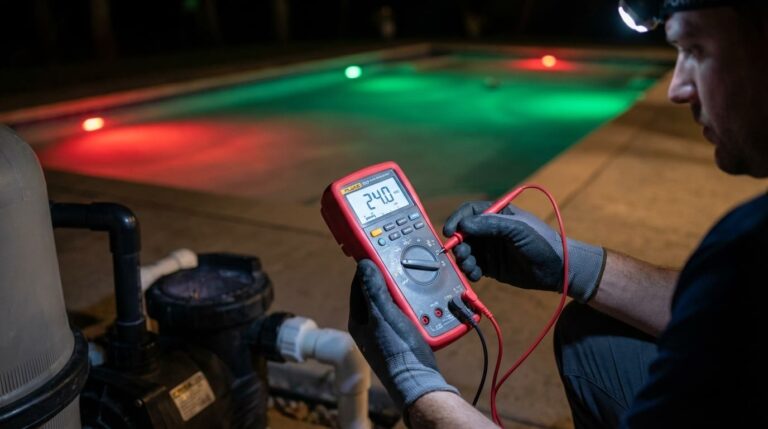
Step 4: Verify Transformer Voltage
Measure voltage at the transformer secondary.
Low or unstable voltage can prevent the internal driver from correctly processing color-change commands.
Step 5: Test the Fixture in Isolation
Bypass the automation system and operate the light from a known-good switch or test setup.
If the light works correctly when isolated, the automation system is likely causing the issue.
Step 6: Inspect the Fixture
If reset attempts fail, inspect for:
- Moisture behind the lens
- Corrosion near the cable entry
- Cloudy lens appearance
- Intermittent flickering
- Dim white output
These symptoms often point toward internal fixture deterioration.
| Symptom | Likely Cause |
|---|---|
| All lights stuck on white | Controller, relay, or transformer |
| One light stuck, others normal | Internal fixture issue |
| Light cycles manually but not on automation | Controller configuration |
| Light flickers then locks on white | Failing driver or weak transformer |
| Stuck on white after power outage | Sync lost — perform reset sequence |
When Is Replacement the Better Option?
Not every stuck-on-white light needs replacement. In fact, many can be recovered through proper troubleshooting. However, there are clear signs that a fixture is nearing the end of its service life.
Replacement is usually the better option when:
- Multiple reset attempts fail
- Moisture is visible inside the lens
- The light flickers or becomes dim
- The fixture repeatedly loses synchronization
- GFCI trips occur when the light is energized
- The unit is more than 3 years old and showing recurring issues
If the budget allows, this is also a good time to discuss whether a different LED platform might suit the installation better. Some pools — especially spas and shallow sun-exposed designs — are particularly demanding on LED fixtures, and a more thermally robust replacement can help reduce future callbacks.
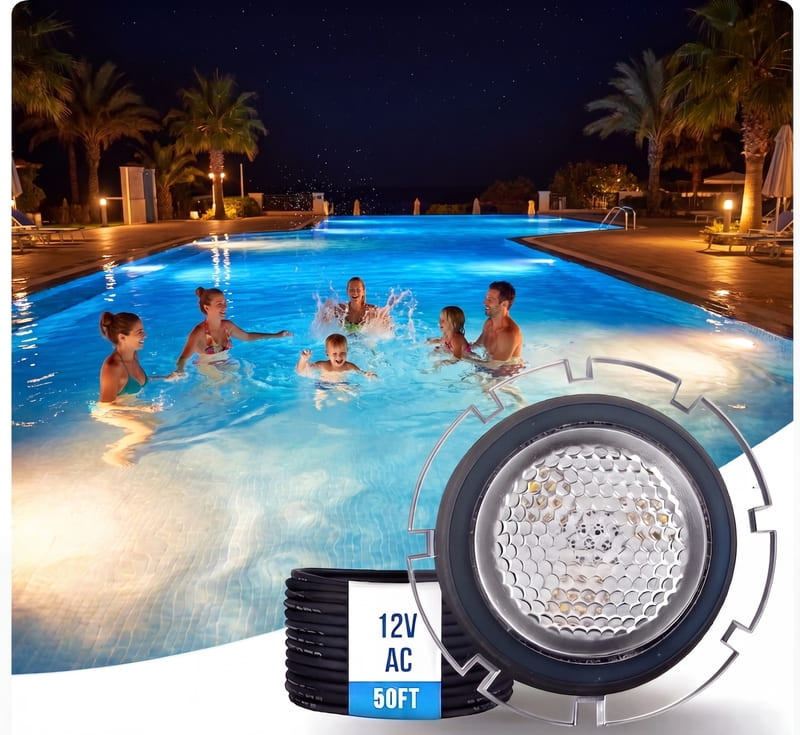
In recent years, many contractors have started looking beyond traditional OEM replacements and evaluating newer GloBrite-compatible alternatives. One example is the LAZE POOL CP-FC-PC55, a GloBrite replacement light designed for contractors who want a more cost-effective replacement without changing the existing niche or low-voltage system.
Unlike many conventional pool lights that rely on air gaps inside the housing, the CP-FC-PC55 uses a fully resin-filled structure combined with thermally conductive potting material. This design helps improve heat transfer, reduce internal moisture-related risks, and better protect electronic components from thermal cycling. In spa environments where elevated temperatures accelerate fixture aging, improved thermal management can be a meaningful advantage.
From a cost perspective, compatible replacement lights can often be significantly less expensive than OEM replacements, sometimes costing around one-third of the OEM price depending on the project and purchasing channel. For contractors managing multiple service accounts, lower replacement costs and improved durability can help reduce long-term operating expenses.
As with any replacement, contractors should still verify voltage requirements, niche compatibility, cord length, and automation compatibility before installation.
FAQ
Why does my Pentair pool light only show white after a power outage?
The fixture may have lost synchronization during the outage. White is the default startup mode for many Pentair color-changing lights. A proper reset sequence often restores normal operation.
Can I fix a stuck Pentair light without replacing it?
In many cases, yes. A correct reset sequence can resynchronize the fixture with the controller. Replacement is usually only necessary when the light no longer responds to troubleshooting steps.
Why are all my pool lights stuck on white?
When multiple lights are affected, the problem is often related to controller programming, relay operation, or transformer performance rather than the fixtures themselves.
Do IntelliBrite and GloBrite use the same reset sequence?
No. Different models may use different timing sequences. Always follow the manufacturer's instructions for the specific fixture installed.
Can a weak transformer cause color-lock issues?
How long should a Pentair color LED light last?
Actual lifespan varies by environment and operating conditions. In many real-world installations, service life commonly falls in the 2-3 year range, with spas generally experiencing shorter lifespans due to higher temperatures.
About the Author: Howard Wang is a Senior Product Engineer with over 10 years of experience in the swimming pool equipment industry, specializing in underwater LED lighting systems, waterproofing structures, thermal management, and contractor-focused troubleshooting solutions.